

Vrushali Nagvekar
3 months ago

Most exporters will read this headline, nod for five seconds and then move on.
That’s exactly why many businesses missing the international opportunities.
When two countries sign an agreement— its not just an agreement but they announce a long-term roadmap backed by a clear trade target—it usually signals something much bigger than political diplomacy. It often marks the beginning of new business opportunities for manufacturers, exporters, logistics companies and also the investors who move early for such opportunities.
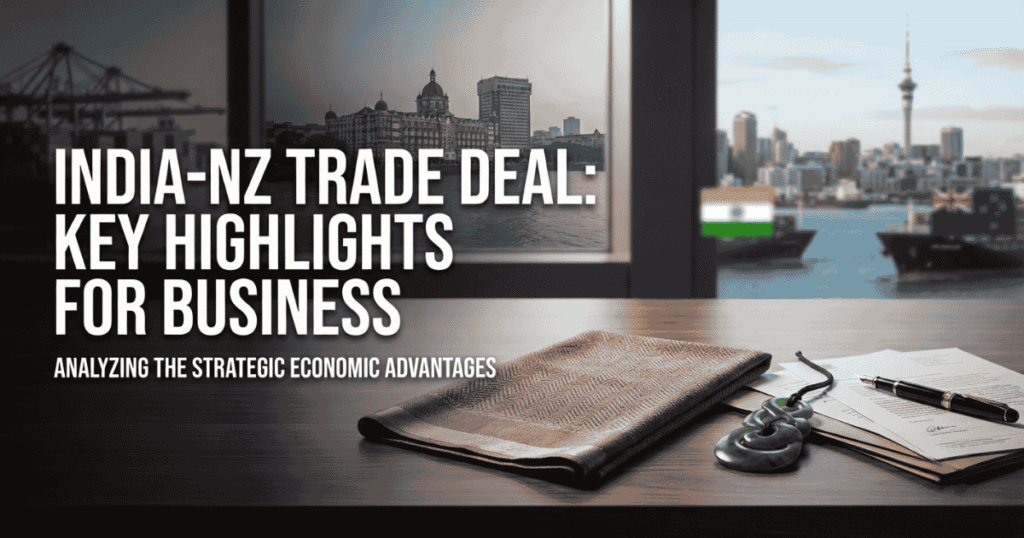
India and New Zealand’s strategic decision to adopt a Partnership Roadmap for 2030, along with an one of the most ambitious bilateral trade worth target of NZ$7 billion, is one such development.
As an Indian manufacturer, exporter , trader or even someone planning to enter into the world of exports, they may be wondering whether this announcement actually matters to there business or not.
If you ask me, As an director of Exim federation with consultation & industry experience worth more than 8+ years since 2018 my answer will be very short & straight yes — but probably not in the way most news headlines explain it.
This article will going to breaks down what the India, New Zealand adopt Strategic Partnership Roadmap to 2030 announcement really means, which industries are likely to benefit, what opportunities exporters should watch and why waiting until everyone starts talking about New Zealand may already be too late.
Over the years, I’ve seen many exporters chase countries only after demand becomes obvious. By then, competition has already increased, margins shrink, and buyers have dozens of supplier options. The smarter approach is understanding where governments are creating long-term trade momentum before the market becomes crowded.
At first sight, this may sounds like another diplomatic announcement.
In reality, it’s a structured framework that both governments intend to follow over the coming years till 2030.
Rather than focusing on a single agreement, the roadmap is multi dimensional & covers multiple areas including:
The headline that figure grabbing attention is the commitment to increase bilateral trade to NZ$7 billion by 2030, which is actually almost doubling the current trade relationship over the coming years.
For those exporters, where the number that matters the most.
Governments don’t directly announce long-term trade targets without strong signals & commitments which expect businesses from both countries to participate.
Majority of the times one common misconception is that only Free Trade Agreements (FTAs) create export opportunities.
That was not entirely true.
Strategic partnerships often become the foundation for:
In many cases, businesses begin exploring suppliers even before new policies are fully implemented.
That creates an advantage for exporters who prepare early.
Many first-time exporters every time at the consultation ask for,
“Should I start marketing after the trade agreement is fully implemented?”
But if ask me, frankly – Usually, that’s already late.
International buyers don’t appear suddenly the day a policy changes.
Buyers / importers spend months in identifying reliable suppliers / exporter, in that process requesting samples, checking certifications, comparing pricing and building relationships.
The exporters already visible during that period of finding often become very easily his preferred suppliers/ exporter for trade deals.
Although majority of the product won’t suddenly experience higher demand, many sectors appear well-positioned as bilateral trade expands.
Some most promising sectors we can consider for this:
India already exports numerous agricultural and processed food products worldwide.
High Potential categories from my opinion like :
exporters traders with internationally recognized food certifications may find increasing opportunities as commercial relationships grows.
India remains one of the world’s largest pharmaceutical manufacturers.
As healthcare cooperation expands, Indian pharmaceutical companies can continue strengthening their presence in developed markets that value cost-effective, high-quality medicines.
Industrial equipment, machinery components, fabricated products and customized engineering solutions continue to be among India’s strongest export sectors.
As investment grows between both countries, chances of demand for industrial suppliers may also expand.
Import export business & Trade today in todays world is isn’t only limited to physical products, India is t largest service provider for the world market & Yes service export is still untapped
In IT & other sector Indian companies providing services in:
This will benefit from deeper commercial engagement between the two economies.
Both India and New Zealand are increasingly focusing on sustainability.
This will going to creates opportunities for exporters dealing in:
Global buyers are increasingly looking for exporters/suppliers not only on price but also on good environmental practices & products.
Imagine two Indian manufacturers/ exporters or even MSME’s dealing in dehydrated onions & FMCG products.
Company A notices the Strategic Partnership announcement today.
Instead of waiting, they begin:
Company B ignores the news.
Two years later, when everyone starts discussing growing India-New Zealand trade, Company B finally begins market research.
By then:
I’ve seen this many times in our past experience repeatedly across different export markets.
International trade rewards businesses that prepare before demand becomes obvious—not after.
This is where actually many exporters unknowingly take unnecessary risks.
Instead of studying the market first, they start sending product catalogues to hundreds of buyers and hope for replies, and at the end got nothing in return for doing all this & then start blaming the import export industry.
A more effective approach is to answer questions like:
This kind of insights help businesses decide whether New Zealand should be a priority market or whether another country offers a better opportunity for their product.
At Exim Federation, this is one of the reasons we emphasize Product Nexus Reports before businesses invest heavily in international marketing. Rather than encouraging exporters to target every country, we help them identify markets that align with their product, production capacity, and long-term business goals. A well-researched strategy usually delivers better results than sending thousands of cold emails without direction.

3 months ago
Fantastic experience. Very impressive experience sharing by Mr Shubham. Many complicated terms made easy to understand and approachable. Thank you very much sir.

3 months ago
MSAMB तर्फे आयोजित करण्यात आलेल्या Business Consultation Session मध्ये सहभागी होण्याची संधी मिळाली. शुभम पवार सर यांनी Import-Export व्यवसायाबाबत अत्यंत सखोल, व्यावहारिक आणि सहज समजेल अशा पद्धतीने मार्गदर्शन केले. या सत्रामध्ये एक्सपोर्ट व्यवसायाची सुरुवात कशी करावी, Shop Act, Udyam Registration, कंपनीची स्थापना कशी करावी, कंपनीचे विविध प्रकार, Bill of Lading (BL) म्हणजे काय, Letter of Credit (LC) चे महत्त्व, Vessel मध्ये माल लोड करण्याची प्रक्रिया, RCMC, APEDA Registration, ICEGATE Registration, FSSAI License, Export Insurance, तसेच Export साठी आवश्यक डेटा कसा शोधावा यासह अनेक महत्त्वाच्या विषयांवर सविस्तर माहिती मिळाली. विशेष म्हणजे प्रत्येक विषय प्रत्यक्ष उदाहरणांसह समजावून सांगितल्यामुळे संपूर्ण प्रक्रिया स्पष्ट झाली आणि Export व्यवसाय सुरू करण्याचा आत्मविश्वास मिळाला. Exim Federation टीमनेही अत्यंत व्यावसायिक, संयमी आणि सहकार्याची भूमिका बजावली. सर्व प्रश्नांची समाधानकारक उत्तरे देऊन योग्य दिशा दिली. Import-Export क्षेत्रात व्यवसाय सुरू करू इच्छिणाऱ्या प्रत्येक उद्योजकाने हे मार्गदर्शन नक्की घ्यावे. मी Exim Federation आणि शुभम पवार सर यांच्या Business Consultation सेवांची मनापासून शिफारस करतो. धन्यवाद!

3 months ago
Thank you for the insightful session.

3 months ago
⭐⭐⭐⭐⭐ Excellent Import-Export session by Mr. Shubham Pawar Sir. The session was practical, easy to understand, and full of valuable insights. Thank you, Sir, for sharing your knowledge and motivating us.

3 months ago
Very well explained….

3 months ago
Sir provided very good information and also cleared any questions that I had.
There’s another misconception worth addressing.
Many aspiring exporters believe attending a weekend export workshop is enough to build an international business.
Training certainly has value. It helps you understand the basics.
But understanding export procedures and successfully securing international buyers are two different challenges.
Think of it like learning to drive.
A classroom explains traffic rules. A driving instructor sits beside you, corrects mistakes, and guides you through real roads.
Export consultancy works in a similar way.
Instead of offering only theory, a consultancy helps businesses with practical decisions such as:
That’s one reason businesses working with structured guidance often avoid expensive trial-and-error decisions during their initial export journey.
If you’re exploring whether New Zealand or any other international market is the right fit for your product, start with research before you start selling.
At Exim Federation, we are already working on multiple exporters, manufacturers, MSMEs and also aspiring exporters through Import Export Consultancy, Product Nexus Reports, export business setup and also for market-entry strategies designed around real business potential rather than guesswork.
If you’d like expert guidance tailored to your product and export goals, you can connect with our team:
Exim Federation By Dattasa Environment
Office no 54, Aditya Shagun mall near Saraswat bank Bavdhan Pune 411021
📧 connect@eximfederation.in
📞 +91-9403733464
🌐 www.eximfederation.in
The roadmap is basically a long-term commitment from both countries to boost & strengthen trade, investment, technology and most important i.e. business cooperation. For Indian exporters, it clear signals growing commercial opportunities rather than immediate benefits. Businesses that gets prepared early with market research and understanding buyer requirements are more likely to benefit as bilateral trade moves toward the target of NZ$7 billion.
A major Sectors like processed foods, agriculture, pharmaceuticals, engineering goods, IT services, renewable energy and sustainable products etc may see new opportunities near future in NZ market. However, before direct going for buyers finding for export each exporters should validate market demand for their specific products instead of assuming every industry will benefit equally from the partnership.
Clear Answer is NO, A big no if you’re planning without proper research * complaisance check.
A government announcement creates opportunities but doesn’t guarantee you demand for each and every product. Before investing in marketing, exporters should assess import trends, competition, pricing, regulations and whether their products align with New Zealand’s market for market intelligence using product nexus reports.
Before starting an search of Buyers randomly Market research actually helps exporters, MSME’s to identify products genuine demand, understand patterns, pricing insights, buyer preferences and compliance requirements. Instead of contacting random leads, businesses can focus on high-potential opportunities, improving response rates and reducing costly mistakes during market entry.
Exim Federation is India’s only platform which provides product wise market intelligence reports in form of Product Nexus Reports with Professional Import Export Consultancy which covers every aspect of EXIM world like business setup and market-entry guidance, support, digital setup & Trustflow system to connect wit buyers etc. Instead of recommending the same strategy to everyone, the team helps businesses identify suitable export product / markets using Data, understand demand and building a structured roadmap for required international business.