

Vrushali Nagvekar
3 months ago


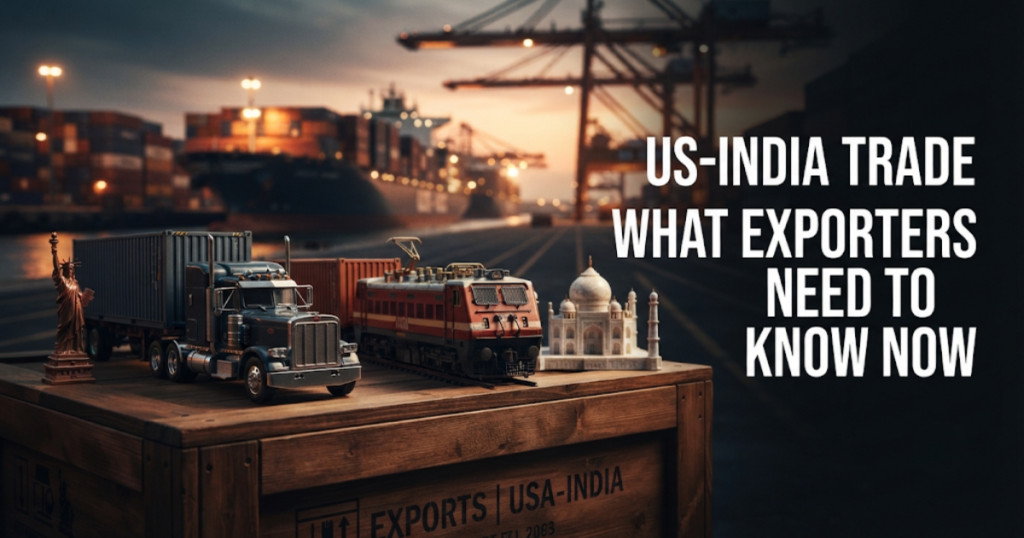
The US-India trade deal is not just a policy headline. For exporters, it can change pricing, margins, product focus and market entry plans faster than many business owners expect. The real mistake is waiting for the final signature before preparing. By then, competitors may already be fixing their export strategy and talking to buyers.
The recent discussion around the US-India trade deal has brought fresh attention to one of India’s most important export markets. India and the US have already been advancing bilateral trade talks through formal negotiation steps and official updates show that the process is active, not theoretical. For manufacturers, startups and MSMEs, this matters because even partial tariff changes or market-access shifts can influence demand, sourcing and buyer interest.
In this article, we will break down what the deal means in practical terms, what exporters should watch and how to prepare without making guesses. The focus is simple: make better business decisions now, not after the market has already moved.
The US is one of India’s largest trade partners and official trade data shows the scale is already substantial. That means any change in duties, documentation or market access can have a real effect on export planning, especially for sectors that depend on price competitiveness. The current negotiation process also suggests that businesses should track developments closely rather than treating them as distant policy news.
One common misconception is that only large exporters benefit from trade deals. In reality, MSMEs often gain the most when they are ready early, because they can move faster in niche categories, private-label supply and buyer-led sourcing. A trade deal does not automatically create export success, but it can remove friction for businesses that are already prepared.
Official and authoritative sources show that India-US trade has remained active and strategically important. The U.S. Trade Representative’s India page notes strong trade volumes and ongoing focus on tariff and non-tariff barriers, while the White House has described the current framework as part of a broader bilateral trade agreement process. Reuters also reported that both sides were working toward a formal accord, with implementation timelines under discussion.
For exporters, the important lesson is not the headline number itself. It is the direction of travel. When negotiations focus on market access, customs facilitation and tariff reduction, exporters should start evaluating product categories that can become more competitive if the rules improve.
One of our consultancy client Pune-based engineering manufacturer MSME exporting sterling machines & also its components to the US currently face margin pressure because of freight, compliance costs and buyer negotiation. If a trade framework lowers trade friction or improves tariff treatment, that company may not need a new product line. It may simply need better HS-code planning, updated documentation and sharper buyer pitch. That is where preparation matters more than panic.
The biggest opportunity is to review where your product sits in the US value chain. If you are in engineering goods, chemicals, electronics, textiles, processed foods or supplier segments linked to larger US buyers, the trade environment deserves attention. Even before any final agreement, buyers often start asking suppliers about capacity, compliance, lead times and price stability.
Exporters should focus on three practical actions:
This is also the right time to study competitor positioning. If another exporter is already using a more efficient sourcing model or better compliance structure, they may win the same order even without offering the lowest base price.
The first mistake is assuming the deal will instantly remove all barriers.
Trade agreements usually come with phased implementation, product-specific terms and political conditions. Businesses that wait for a dramatic overnight shift often lose time.
The second mistake is focusing only on tariff reduction. In export business, buyers care about reliability, documentation, shipment consistency and claim handling.
A lower duty helps, but it does not fix poor communication or weak operational discipline.
The third mistake is ignoring product-level strategy.
Not every exporter should rush toward the US market just because headlines are positive. The better approach is to check whether your product has a clear buyer need, healthy margin and manageable compliance load.
Start with a simple readiness check. Review your top products, target buyers, certifications and landed cost structure. If your product is already selling in the Gulf, Europe or Southeast Asia, the US can be a logical expansion market, but only if your pricing and compliance are strong.
Use this five-step roadmap:
The US-India trade deal should be treated as a business signal, not just a news event. Exporters who prepare early can turn policy movement into real commercial advantage.
The US-India trade deal is a serious business signal for exporters, not just a news headline.
India and the US are actively working through a broader bilateral trade agreement process.
MSMEs can benefit if they prepare early with pricing, compliance and buyer readiness.
Tariff changes matter, but they are only one part of export success.
Product-level planning is more important than reacting emotionally to news.
Exporters should review landed cost, documentation and target market fit now.
Early preparation can create an advantage before competitors move.
3 months ago
Fantastic experience. Very impressive experience sharing by Mr Shubham. Many complicated terms made easy to understand and approachable. Thank you very much sir.

3 months ago
MSAMB तर्फे आयोजित करण्यात आलेल्या Business Consultation Session मध्ये सहभागी होण्याची संधी मिळाली. शुभम पवार सर यांनी Import-Export व्यवसायाबाबत अत्यंत सखोल, व्यावहारिक आणि सहज समजेल अशा पद्धतीने मार्गदर्शन केले. या सत्रामध्ये एक्सपोर्ट व्यवसायाची सुरुवात कशी करावी, Shop Act, Udyam Registration, कंपनीची स्थापना कशी करावी, कंपनीचे विविध प्रकार, Bill of Lading (BL) म्हणजे काय, Letter of Credit (LC) चे महत्त्व, Vessel मध्ये माल लोड करण्याची प्रक्रिया, RCMC, APEDA Registration, ICEGATE Registration, FSSAI License, Export Insurance, तसेच Export साठी आवश्यक डेटा कसा शोधावा यासह अनेक महत्त्वाच्या विषयांवर सविस्तर माहिती मिळाली. विशेष म्हणजे प्रत्येक विषय प्रत्यक्ष उदाहरणांसह समजावून सांगितल्यामुळे संपूर्ण प्रक्रिया स्पष्ट झाली आणि Export व्यवसाय सुरू करण्याचा आत्मविश्वास मिळाला. Exim Federation टीमनेही अत्यंत व्यावसायिक, संयमी आणि सहकार्याची भूमिका बजावली. सर्व प्रश्नांची समाधानकारक उत्तरे देऊन योग्य दिशा दिली. Import-Export क्षेत्रात व्यवसाय सुरू करू इच्छिणाऱ्या प्रत्येक उद्योजकाने हे मार्गदर्शन नक्की घ्यावे. मी Exim Federation आणि शुभम पवार सर यांच्या Business Consultation सेवांची मनापासून शिफारस करतो. धन्यवाद!

3 months ago
Thank you for the insightful session.

3 months ago
⭐⭐⭐⭐⭐ Excellent Import-Export session by Mr. Shubham Pawar Sir. The session was practical, easy to understand, and full of valuable insights. Thank you, Sir, for sharing your knowledge and motivating us.

3 months ago
Very well explained….

3 months ago
Sir provided very good information and also cleared any questions that I had.
The US-India trade deal could open useful opportunities, but only for businesses that prepare with clarity. Exporters should look beyond the headline and focus on product fit, compliance, pricing and buyer readiness. That is how a policy update becomes a real commercial advantage. Exim Federation can support this process through practical Import Export Consultancy and Product Nexus Reports, especially for businesses that want a sharper export direction.
Contact: Exim federation By Dattasa environment
+91-9403733464,
website – www.eximfederation.in.
Yes, but only if they are ready to act. Small exporters often benefit when trade conditions improve because they can move quickly into niche products, private-label supply and specialized buyer segments. The deal itself does not guarantee orders. It improves the business environment, but performance still depends on pricing, compliance and delivery reliability.
No. Trade deals usually involve phased changes, product-specific concessions and negotiated conditions. Some tariffs may be reduced, while others may remain in place depending on the final terms. Exporters should avoid assuming full duty-free access unless the official agreement clearly confirms it.
Manufacturers and MSMEs in engineering goods, chemicals, electronics, textiles and supplier industries linked to US buyers should pay close attention. These sectors often feel changes in market access, freight and buyer sourcing decisions very quickly. Exporters in other sectors should still monitor the agreement if the US is part of their growth plan.
No, waiting is usually a mistake. Export markets reward preparation, not hesitation. Businesses that use the waiting period to improve product documentation, buyer outreach, pricing and compliance are better positioned to respond when conditions change. By the time the agreement is signed, competitors may already be moving.
The biggest myth is that a trade deal automatically creates export success. In practice, deals reduce barriers, but they do not build a business for you. Exporters still need strong products, reliable logistics, clear paperwork and a market-specific sales plan. Without that, even favorable trade terms may not lead to growth.
Start with your landed cost, product compliance and buyer target list. Then review whether your product can compete on quality, consistency and delivery, not just price. MSMEs should also track official updates and build a simple export plan instead of waiting for a perfect policy outcome.