
US-India Trade Deal: What Exporters Need to Know Now
US-India Trade Deal: What Exporters Need to Know Now The US-India trade deal is not just a policy headline. For exporters, it can change pricing, margins, product focus and market entry plans faster than many business owners expect. The real mistake is waiting for the final signature before preparing. By then, competitors may already be fixing their export strategy and talking to buyers. The recent discussion around the US-India trade deal has brought fresh attention to one of India’s most important export markets. India and the US have already been advancing bilateral trade talks through formal negotiation steps and official updates show that the process is active, not theoretical. For manufacturers, startups and MSMEs, this matters because even partial tariff changes or market-access shifts can influence demand, sourcing and buyer interest. In this article, we will break down what the deal means in practical terms, what exporters should watch and how to prepare without making guesses. The focus is simple: make better business decisions now, not after the market has already moved. Why this matters now The US is one of India’s largest trade partners and official trade data shows the scale is already substantial. That means any change in duties, documentation or market access can have a real effect on export planning, especially for sectors that depend on price competitiveness. The current negotiation process also suggests that businesses should track developments closely rather than treating them as distant policy news. One common misconception is that only large exporters benefit from trade deals. In reality, MSMEs often gain the most when they are ready early, because they can move faster in niche categories, private-label supply and buyer-led sourcing. A trade deal does not automatically create export success, but it can remove friction for businesses that are already prepared. What the data shows Official and authoritative sources show that India-US trade has remained active and strategically important. The U.S. Trade Representative’s India page notes strong trade volumes and ongoing focus on tariff and non-tariff barriers, while the White House has described the current framework as part of a broader bilateral trade agreement process. Reuters also reported that both sides were working toward a formal accord, with implementation timelines under discussion. For exporters, the important lesson is not the headline number itself. It is the direction of travel. When negotiations focus on market access, customs facilitation and tariff reduction, exporters should start evaluating product categories that can become more competitive if the rules improve. Lets understand with an example One of our consultancy client Pune-based engineering manufacturer MSME exporting sterling machines & also its components to the US currently face margin pressure because of freight, compliance costs and buyer negotiation. If a trade framework lowers trade friction or improves tariff treatment, that company may not need a new product line. It may simply need better HS-code planning, updated documentation and sharper buyer pitch. That is where preparation matters more than panic. Practical opportunities for exporters and MSME’s The biggest opportunity is to review where your product sits in the US value chain. If you are in engineering goods, chemicals, electronics, textiles, processed foods or supplier segments linked to larger US buyers, the trade environment deserves attention. Even before any final agreement, buyers often start asking suppliers about capacity, compliance, lead times and price stability. Exporters should focus on three practical actions: Identify products with repeat demand in the US market. Check where your pricing becomes weak after duty and logistics. Build buyer-ready documentation, including product specs, certifications and consistent labeling. This is also the right time to study competitor positioning. If another exporter is already using a more efficient sourcing model or better compliance structure, they may win the same order even without offering the lowest base price. https://youtube.com/shorts/2hZ11FBRZOQ?si=QgUNzX_5Oox2xL_z Common mistakes exporters and even you also should avoid The first mistake is assuming the deal will instantly remove all barriers. Trade agreements usually come with phased implementation, product-specific terms and political conditions. Businesses that wait for a dramatic overnight shift often lose time. The second mistake is focusing only on tariff reduction. In export business, buyers care about reliability, documentation, shipment consistency and claim handling. A lower duty helps, but it does not fix poor communication or weak operational discipline. The third mistake is ignoring product-level strategy. Not every exporter should rush toward the US market just because headlines are positive. The better approach is to check whether your product has a clear buyer need, healthy margin and manageable compliance load. Practical Action steps for exporters Start with a simple readiness check. Review your top products, target buyers, certifications and landed cost structure. If your product is already selling in the Gulf, Europe or Southeast Asia, the US can be a logical expansion market, but only if your pricing and compliance are strong. Use this five-step roadmap: Map your current export products against US demand. Calculate landed cost with realistic duty and freight assumptions. Review packaging, labeling and compliance gaps. Shortlist potential US buyers or importers. Track official trade updates and adjust your pitch accordingly. The US-India trade deal should be treated as a business signal, not just a news event. Exporters who prepare early can turn policy movement into real commercial advantage. Key Takeaways The US-India trade deal is a serious business signal for exporters, not just a news headline. India and the US are actively working through a broader bilateral trade agreement process. MSMEs can benefit if they prepare early with pricing, compliance and buyer readiness. Tariff changes matter, but they are only one part of export success. Product-level planning is more important than reacting emotionally to news. Exporters should review landed cost, documentation and target market fit now. Early preparation can create an advantage before competitors move. Conclusion The US-India trade deal could open useful opportunities, but only for businesses that prepare with clarity. Exporters should look beyond the headline and focus on product fit, compliance, pricing and buyer readiness. That is how a policy update becomes a
India-UK Car Import Quota Rules Explained: A Practical Guide for Businesses

India-UK Car Import Quota: What Businesses Need to Know The India-UK car import quota is not just another customs update. It is a reminder that trade policy can change buying decisions, distributor plans, and margin calculations much faster than many businesses expect. India’s DGFT has opened applications for quota allocation under the India-UK CETA for calendar year 2026, with the first phase covering 9,316 passenger vehicles and applications open from July 21 to August 4. UK passenger cars covered under India-UK trade pact quotas For importers, dealers, and auto businesses, the real question is not whether the India-UK car import quota exists. The real question is whether you understand the quota rules well enough to use them without wasting time, money, or compliance effort. Under the India-UK CETA, India has set a structured tariff-rate-quota system for UK vehicle imports, and the first year includes fixed allocations by vehicle category. This matters because quota-based imports are very different from ordinary imports. You need the right documents, the right counterparties, and the right timing. In this article, you will see what the quota covers, how the process works, where businesses can benefit, and which mistakes to avoid. Why this matters now The key change is that vehicle import decisions are now tied to a formal quota and a concessional duty structure under CETA. According to DGFT, only OEMs and their authorised dealers or channel partners can apply for tariff rate quotas, and the application must be backed by a pre-purchase agreement from a UK-based OEM. This is important for three reasons: It limits applications to serious, traceable market participants. It pushes businesses to plan inventory and pricing earlier. It makes compliance part of the commercial strategy, not just a back-office task. A common misconception is that lower duty automatically means easy savings. In reality, quota access, origin proof, and allocation timing decide whether the benefit is actually available. What the quota covers The first-year allocation has been split across passenger vehicle categories, and the allocation is not flat across all cars. Reported quota blocks include 2,329 units for cars up to 1,500 cc, 2,329 units for petrol above 1,500 cc but below 3,000 cc and diesel above 1,500 cc but not exceeding 2,500 cc, and 4,658 units for larger petrol and diesel vehicles. The concessional duty also varies by category. For some vehicles, the basic customs duty drops from 66% to 50%, while larger-engine vehicles reportedly see duty reduced from 110% to 30% under quota conditions. For businesses, this means one thing: category selection matters. A wrong assumption about engine capacity, fuel type, or quota band can change landed cost calculations completely. Practical opportunities for importers The biggest opportunity is not for speculative buyers. It is for businesses that can align sourcing, documents, and sales commitments before the quota is exhausted. DGFT has said the cumulative quota allocation will be monitored, and once the annual limit is reached, no additional TRQ certificates will be issued. That creates real openings for: Premium car distributors planning UK-origin inventory. Authorised channel partners with formal OEM backing. Dealers building a niche in specific engine-size or premium segments. Buyers who can use early allocation to improve margin predictability. Mini case study: a mid-sized auto importer in India planning a premium British model cannot rely on “we will apply later.” If the quota closes early, the business may lose the lower-duty window entirely. In that case, the gap is not just administrative; it becomes a pricing and sales problem. Common mistakes to avoid The first mistake is treating quota as a standard import license. It is not. The DGFT process is tied to a specific TRQ structure and a defined application window for calendar year 2026. The second mistake is ignoring origin and documentation. Importers must produce a valid Certificate of Origin issued by the authorised UK authorities at the time of import. Without that, the concessional duty benefit can fail at the customs stage. The third mistake is assuming all vehicle types are treated the same. Reports show the policy is category-based, and the rules differ by engine size, fuel type, and quota band. Action steps for businesses If you are considering participation, the sequence should be practical and fast: Confirm whether you are eligible as an OEM, authorised dealer, or channel partner. Collect the UK OEM pre-purchase agreement and supporting trade documents. Map each model to the correct quota category and duty band. Check the application window and file before the quota gets consumed. Build landed-cost sheets with and without concessional duty so your pricing stays realistic. One official reference point worth tracking is the DGFT public notices page, which hosts the TRQ-related notices for India-UK CETA. Key Takeaways India has opened applications for the India-UK car import quota for calendar year 2026. The first phase covers 9,316 passenger vehicles. Only OEMs and their authorised dealers or channel partners are eligible to apply. A UK OEM pre-purchase agreement is required for the TRQ application. Duty benefits depend on vehicle category, engine size, and quota band. Once the quota is exhausted, no more TRQ certificates are issued for that year. Documentation and timing matter as much as pricing. Conclusion The India-UK car import quota is a good example of how trade opportunities reward preparation, not guesswork. Businesses that understand quota timing, documentation, and duty structure will be better placed to make informed import decisions under the India-UK CETA. The phrase India-UK car import quota may sound narrow, but for the right importer it can shape pricing, sourcing, and sales strategy in a meaningful way. Exim Federation can support this through import-export consultancy and Product Nexus Reports for businesses evaluating practical trade moves. For guidance, contact +91-9403733464 or visit www.eximfederation.in. FAQ -Frequently Asked Questions 1) Who can apply for the India-UK car import quota? Only OEMs and their authorised dealers or channel partners are eligible to apply for the tariff rate quota under the DGFT process. The application also needs a UK OEM pre-purchase agreement showing the
Why ASEAN, Africa Are Now Driving India’s Export Boom — And How MSMEs Can Tap These Markets
Why ASEAN and Africa Are Now Driving India’s Export Boom — And How MSMEs Can Tap These Markets ASEAN – Africa lead India’s export growth in first two months of FY-27 Most Indian exporters still think “USA and Europe” when they hear the word exports, but the data for FY-27 tells a very different story. In the first two months of the year, ASEAN and African economies contributed the biggest share to India’s export growth, with shipments to these regions rising far faster than traditional Western markets. If you are still building your plan only around NAFTA and Europe, you are already late to the party. Ministry of Commerce data shows that ASEAN, Africa led India’s export growth in the first two months of FY-27 with exports to ASEAN jumping approximately 66.9% and to Africa 53.1% year-on-year in April–May. Together, these regions added over USD 7.6 billion in extra exports, while NAFTA and Europe grew much more modestly. For a new exporter or MSME, this is not just “big picture news” — it directly affects where you should focus your energy, product research and relationship-building. In this article, we’ll break down what this shift means, which opportunities are opening up, common mistakes to avoid and practical steps to align your export strategy with this new reality. Why ASEAN – Africa Are Suddenly comes at Centre Stage When it comes to the India’s exports of goods and services in April–May FY-27 are estimated at USD 162.69 billion overall, with regions outside North America and Europe now more than half of total exports. Within this time period, ASEAN and Africa lead India’s export growth in the first two months of FY-27 by contributing the largest incremental gains. Key data points you should know: Exports to ASEAN: Up 66.9%, from USD 6.3 billion to USD 10.5 billion. Exports to Africa: Up 53.1%, from USD 6.3 billion to USD 9.6 billion. Combined additional exports from these regions: Over USD 7.6 billion versus last year’s same period. At the same time, NAFTA remained India’s largest destination but grew only 2.6% and Europe 4%, showing slower momentum compared to these emerging markets. For MSMEs, the message is simple: growth is shifting where competition is relatively lower and demand is rising faster, especially in sectors like engineering goods, pharmaceuticals, consumer products, food items and petroleum products. Common Misconception: “Only Western Markets Are Worth Targeting” A big misconception among new exporters is that serious export success is possible only if you break into the US or EU first. In reality, the commerce ministry’s data clearly shows ASEAN, Africa lead India’s export growth in the first two months of FY-27, while Western markets are growing but not driving the expansion. Why this mindset of exporters specially for the new business is risky now: Western markets are mature with high competition and tighter regulatory requirements. Many ASEAN and African economies are in a phase of rapid infrastructure and consumption growth, creating demand for a wide range of Indian products. Trade relationships with several of these countries are strengthening through ongoing negotiations and cooperation. Training programs often keep talking about “US, UK, EU” because they sound aspirational. The practical truth is that implementation-focused export consultancy aimed at ASEAN and African markets can deliver quicker wins and more sustainable growth for MSMEs. https://youtube.com/shorts/2hZ11FBRZOQ?si=QgUNzX_5Oox2xL_z Where Exactly Are the Opportunities? To make this more firm & workable lets understand this with an example, consider a small engineering goods manufacturer in Pune producing pumps and basic agricultural equipment. In the past, they tried to target Europe but struggled with certifications, high compliance costs and long sales cycles. In early FY-27, they shifted strategy after seeing that ASEAN, Africa led India’s export growth in the first two months of FY-27, focusing on markets like Tanzania, South Africa and Sri Lanka. Step-by-step, they: Identified demand for affordable irrigation equipment and agro machinery in East Africa through trade data and embassy reports. Aligned their product range to local needs (simple, rugged equipment rather than highly automated systems). Worked with an implementation-focused consultant to build a Product Nexus Report — mapping their product SKUs to HS codes, suitable target markets and indicative pricing bands. Leveraged trade fairs and B2B platforms focusing on Africa and ASEAN instead of general global platforms. Within 12–18 months, their export share from ASEAN and Africa crossed what they previously attempted in Europe, with fewer regulatory hurdles and more responsive buyers. This is the kind of pivot many MSMEs can make when they read the data correctly and design strategy around it. How Can a New Exporters Can Align Their Strategy with the FY-27 Shift If you are planning to enter exports or expand them, here is a practical roadmap based on the current pattern where ASEAN, Africa lead India’s export growth in the first two months of FY-27. Start with data, not assumptions.Use official commerce ministry and DGFT data to see which product categories are growing in ASEAN and African markets. If a regulation or detailed breakdown is not clearly published, mark it as [VERIFY-] in your internal notes instead of guessing. Prioritize 3–5 target countries.Do not target “ASEAN” or “Africa” as one big block. Shortlist specific countries like Singapore, Tanzania, South Africa, Sri Lanka, or Kenya based on sector demand and logistics feasibility. Develop a Product Nexus, not just a product list.Map your products to HS codes, competitor offerings, local price points and buyer segments. This turns a broad “I want to export” wish into a clear export strategy for ASEAN and Africa in line with current trends. Focus on implementation, not only training.Many businesses attend generic export training and then get stuck at documentation, buyer discovery and pricing. Consultancy that walks with you through HS code alignment, documentation and market entry often produces faster, measurable results. Plan logistics and payment terms early.For new destinations, understand freight routes, transit times, insurance and realistic payment protection methods (LC, advance, mixed terms) before quoting. Emerging markets can be highly rewarding but require
India – EU Strengthen Strategic Partnership at 3rd TTC — New Opportunities in Tech and Trade
India – EU Strengthen Strategic Partnership at 3rd TTC — New Opportunities in Tech and Trade India – EU Strengthen Strategic Partnership at 3rd TTC India-EU Trade and Technology Council is no longer just a diplomatic forum now. With the latest meeting, India and the EU are signaling that trade, technology and supply chains will now move together not separately like it has to be previously. Especially for exporters, manufacturers and startups looking for the change in the eco system. It means new possibilities & openings in advanced manufacturing, digital trust, clean energy and tech collaboration. Introduction The phase of India – EU strengthening their strategic partnership at 3rd TTC is more than a headline for businesses. It mainly reflects a practical shift in how India and the European Union want to work together across business, technology and trusted trade partnership. The immediate question that may arise for business owners is simple: what does this mean in real terms of business development expansion? The answer matters because the EU is one of the most valuable & high paying markets for Indian exporters, but it is also one of the most demanding. Compliance, product standards, sustainability expectations and supply chain reliability all matter. In this article, you will see what was discussed, why it matters and where Indian businesses can find opportunities. What the TTC means The India – EU strengthened strategic partnership at 3rd TTC shows that both sides are treating the TTC as a working platform, not a symbolic one. According to the reports, the both sides are focusing on artificial intelligence, semiconductors, quantum technologies, clean energy and resilient supply chains. For businesses, that means the partnership is moving into areas where commercial value is created through collaboration, standards and trusted ecosystems. It is not only about government-level agreements. It can shape procurement, research, innovation funding, supplier selection and technology partnerships. Why exporters should care Indian exporters often think EU opportunities are limited to finished goods shipments. That is a common misconception. In reality, this partnership can influence broader business categories such as component supply, co-development, testing, certification and technology-enabled services. The key commercial signals are: Stronger focus on trusted and resilient supply chains. More co-operation in clean technologies and green manufacturing. Greater interest in semiconductor ecosystems and advanced manufacturing. Better scope for digital trade support, including digital trust services. If your business serves electronics, automotive, renewables, industrial equipment, or engineering goods, this is worth watching closely. Even service providers that support export operations may benefit from new cross-border standards and partnerships. Where the opportunities are The most practical opportunities are likely to appear in sectors where India already has capability and the EU is actively looking for reliable partners. The TTC discussions reportedly covered AI, semiconductors, clean energy, hydrogen-related work, battery recycling and startup cooperation. That opens room for Indian companies in these areas: Food & FMCG sector Electronics and semiconductor supply chains. Clean-tech components and energy efficiency products. EV charging and testing ecosystem support. Green manufacturing and circular economy solutions. IT, digital compliance and trusted tech services. A useful example is a mid-sized Indian manufacturer that supplies precision parts for EV systems. Earlier, it may have focused only on price and delivery. Now it can position itself around traceability, quality systems and long-term supply reliability, which are exactly the kind of features EU buyers value. Common mistakes to avoid Many businesses hear a positive trade headline and assume exports will automatically rise. That is not how the EU market works. Good policy direction creates opportunity, but real entry still depends on product readiness, documentation, certification and buyer confidence. Avoid these mistakes: Assuming policy news alone will bring orders. Ignoring EU product standards and sustainability requirements. Treating Europe as one uniform market. Waiting until negotiations are complete before preparing. Sending generic sales pitches instead of market-specific offers. The smarter approach is to prepare now. Build product-market fit, create technical data sheets, review compliance and identify target countries and buyer segments before the opportunity window becomes crowded. What businesses should do now The best response to India – EU strengthening strategic partnership at 3rd TTC is preparation. Businesses should use this moment to tighten their export strategy and assess where they fit in the evolving India-EU value chain. A practical checklist: Review product compliance and documentation. Identify which EU countries match your category best. Strengthen your quality, traceability and sustainability story. Build a buyer pitch around reliability, not just pricing. Track official updates on trade and technology cooperation. One important reference point is the European Commission’s TTC update page, which provides official information on India-EU trade and technology cooperation. https://digital-strategy.ec.europa.eu/en/news/eu-and-india-strengthen-strategic-partnership-third-trade-and-technology-council Key Takeaways The India – EU strengthened strategic partnership at 3rd TTC development is focused on trade, technology and security. AI, semiconductors, quantum technologies and clean energy are core cooperation areas. Exporters should see this as a market-preparation signal, not a guarantee of sales. EU buyers will still expect strong compliance, quality and supply reliability. Clean-tech, electronics, EV-related supply chains and digital services may gain the most. Businesses that prepare early will be better placed than those waiting for headlines to turn into demand. Conclusion The message from the 3rd TTC is clear: India and the EU want a deeper, more practical partnership. For exporters and manufacturers, that means opportunity is growing in technology-led and compliance-driven sectors, but only businesses that prepare properly will benefit. The real advantage will go to companies that align products, processes and market strategy with EU expectations. If you want to start & expand your business on an international platform with practical guidance & experts with 8+ years of industry experience on Business setup, market targeting or product-level opportunity mapping, Exim Federation can help through step by step consultancy and Product Nexus Reports. For more details you can connect – : +91-9403-73-3464 visit us- www.eximfederation.in. FAQ -Frequently Asked Questions 1) What is the India-EU Trade and Technology Council? The India-EU Trade and Technology Council is a formal platform where both sides discuss
Why India’s June exports stayed strong even as the trade deficit hit a five-month high
India’s June exports shine through West Asia dark clouds; trade deficit widens to five-month high Why India’s June exports stayed strong even as the trade deficit hit a five-month high India’s June exports shine through even from the West Asia dark clouds; a trade deficit widened to five-month high and this combination says something which needs to pay an attenuation & equally importance as well: strong export numbers do not always mean a comfortable trade picture. Many business owners assume rising exports automatically reduce external pressure, but the equally important parameter in the trade deficit i.e. imports can rise faster and change the story quickly. For exporters, this is not just macroeconomics. It affects pricing, shipping, market choice and the kind of products that stay competitive in uncertain global conditions. Lets understand The latest trade data of the ministry of commerce shows a familiar but important pattern: India’s outbound shipments held up well in June, even as the wider trade deficit expanded. For manufacturers, new exporters and MSMEs. The real question is not whether exports rose. It is why they rose, which sectors from the exports supported them and how West Asia-linked disruptions can still affect margins, freight and delivery timelines. This article breaks that down in simple terms, so you can understand what the numbers mean for your export plans and where the risks sit. What the June data signals India’s merchandise exports rose to about $40.41 billion in June, while the merchandise trade deficit widened to a five-month high of $30.43 billion because imports grew faster. That is the key message behind the headline: export resilience is real, but so is import pressure as well working silently. The broader point is that a healthy export month can still coexist with a weak trade balance if energy, commodities or even the chances of other critical imports becomes costlier. What matters for business owners is the quality of export growth: Some sectors are growing because of rising demand. Some are growing rapidly in the FOMO ( Fear of missing out) because buyers are reordering faster due to supply chain uncertainty. Some sectors are growing just because India is gaining share in markets that are actively diversifying away from riskier sourcing routes. That distinction helps you avoid reading the headline too simply. Why West Asia still matters West Asia remains important because it influences shipping routes, crude prices, insurance costs and also the confidence of buyers. Even when exports do not collapse, the region can create indirect pressure from the International freight volatility and input inflation. That is why a “trade deficit” headline often reflects more than just export performance. It can also reflect costlier imports, especially when crude-linked products move sharply. For exporters, the practical lesson is straightforward: Monitor route risk before confirming delivery commitments. Recheck landed cost assumptions every time freight or fuel moves. Avoid quoting long validity periods when input costs are unstable. Keep alternate shipping options ready for sensitive markets. A common misconception is that geopolitical stress only hurts exporters shipping directly to the affected region. In reality, the shock often spreads through freight, insurance and raw material prices even for exporters selling elsewhere. Which sectors can benefit When exports remain strong during uncertainty, it usually points to sectors with either strong global demand or better diversification. Recent trade reporting has highlighted engineering goods, electronics and also in gems & jewellery as important contributors in the broader export trend. That matters because these sectors tend to reflect capability, pricing discipline and market reach rather than luck alone. For smaller businesses, this creates a useful benchmark: If your product category is already seeing movement, enter with sharper positioning. If your category is slow, look at packaging, compliance and buyer targeting before blaming the market. If you serve a price-sensitive category, check whether your value proposition is still strong after freight and credit costs. Lets understand with an example & Case study A mid-sized manufacturer exporting industrial components to Gulf-linked buyers may not see demand disappear during a regional shock. But the business can still also have chances of losing margin if shipping costs rise, payment cycles stretch or buyers delay replenishment. A better response is not panic. It is route planning, shorter quoting windows and closer coordination with freight partners and distributors. That is where export strategy work often matters more than generic training. What exporters should do now This is a good time to review your export setup with fresh eyes. Businesses often focus only on getting the first order, but the real challenge is sustaining profitable shipments through volatility. If your pricing model, logistics plan and buyer communication are not built for disruption, a strong export month in the news will not help your own margins. Practical actions to consider: Review product-level profitability after freight and insurance. Re assessment of consignment in West Asia exposure in your buyer mix. Strengthen documentation and delivery planning. Track which markets are expanding because of rerouting or demand shifts. Build a backup plan for raw material sourcing. If you are still at the stage of setting up exports, this is also a reminder that implementation matters more than theory. Exim federations Import Export consultancy, product nexus reports and market selection work often save more time than Import export training & institute which are still on the model of ppt based learning & group theoretical training. For official trade monitoring, the Ministry of Commerce and Industry’s trade analytics and statistics resources are the most relevant starting point. A useful reference is the Government of India’s trade analytics portal: https://trade-analytics.commerce.gov.in/ Key Takeaways India’s June exports held up well even as the trade deficit widened. The real issue is not just export growth, but faster import growth. West Asia matters because it affects freight, fuel, insurance and supply-chain confidence. Exporters should watch landed cost, route risk and quote validity more carefully. Sector strength in engineering, electronics and jewellery shows where momentum can come from. Implementation-focused export planning is often more useful than
India–New Zealand Roadmap 2030: NZ$7B Trade Target
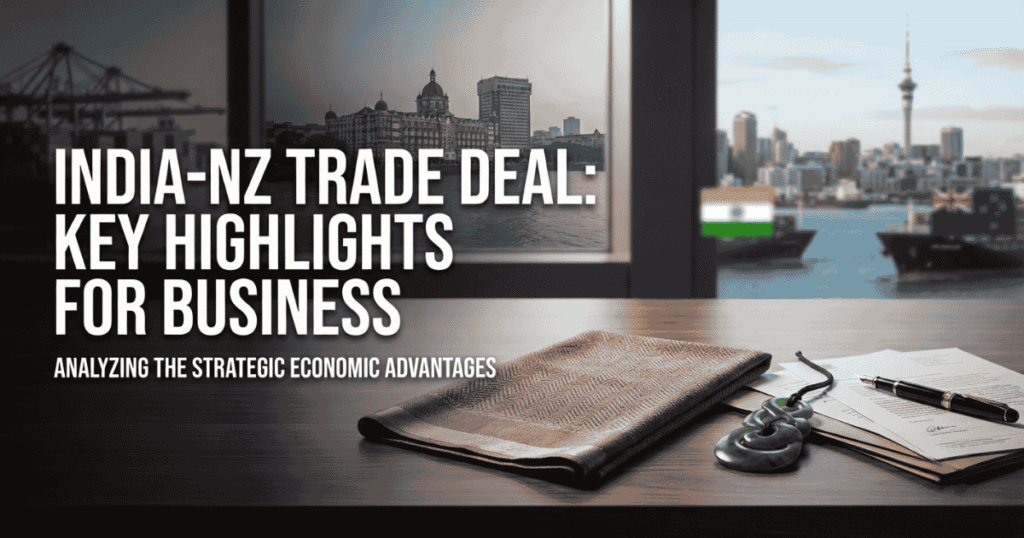
India – New Zealand Adopt Strategic Partnership Roadmap to 2030: What the NZ$7 Billion Trade Target Really Means for Indian Exporters Most exporters will read this headline, nod for five seconds and then move on. That’s exactly why many businesses missing the international opportunities. When two countries sign an agreement— its not just an agreement but they announce a long-term roadmap backed by a clear trade target—it usually signals something much bigger than political diplomacy. It often marks the beginning of new business opportunities for manufacturers, exporters, logistics companies and also the investors who move early for such opportunities. India and New Zealand’s strategic decision to adopt a Partnership Roadmap for 2030, along with an one of the most ambitious bilateral trade worth target of NZ$7 billion, is one such development. As an Indian manufacturer, exporter , trader or even someone planning to enter into the world of exports, they may be wondering whether this announcement actually matters to there business or not. If you ask me, As an director of Exim federation with consultation & industry experience worth more than 8+ years since 2018 my answer will be very short & straight yes — but probably not in the way most news headlines explain it. This article will going to breaks down what the India, New Zealand adopt Strategic Partnership Roadmap to 2030 announcement really means, which industries are likely to benefit, what opportunities exporters should watch and why waiting until everyone starts talking about New Zealand may already be too late. Over the years, I’ve seen many exporters chase countries only after demand becomes obvious. By then, competition has already increased, margins shrink, and buyers have dozens of supplier options. The smarter approach is understanding where governments are creating long-term trade momentum before the market becomes crowded. What Is the India-New Zealand Strategic Partnership Roadmap to 2030? At first sight, this may sounds like another diplomatic announcement. In reality, it’s a structured framework that both governments intend to follow over the coming years till 2030. Rather than focusing on a single agreement, the roadmap is multi dimensional & covers multiple areas including: Bilateral trade between Indian & NZ Investment Defense cooperation Supply chain management and cooperation. Technology collaboration & transfer Education Agriculture Maritime security Innovation with R&D The headline that figure grabbing attention is the commitment to increase bilateral trade to NZ$7 billion by 2030, which is actually almost doubling the current trade relationship over the coming years. For those exporters, where the number that matters the most. Governments don’t directly announce long-term trade targets without strong signals & commitments which expect businesses from both countries to participate. https://youtube.com/shorts/2hZ11FBRZOQ?si=exdYnDP8In5bdzes Why This Announcement Matters More Than Most Exporters Think? Majority of the times one common misconception is that only Free Trade Agreements (FTAs) create export opportunities. That was not entirely true. Strategic partnerships often become the foundation for: Easier business collaboration. Faster policy discussions Better market access Investment promotion Industry-level cooperation Business delegations Trade exhibitions Joint innovation projects In many cases, businesses begin exploring suppliers even before new policies are fully implemented. That creates an advantage for exporters who prepare early. A Common Mistake we observed Many first-time exporters every time at the consultation ask for, “Should I start marketing after the trade agreement is fully implemented?” But if ask me, frankly – Usually, that’s already late. International buyers don’t appear suddenly the day a policy changes. Buyers / importers spend months in identifying reliable suppliers / exporter, in that process requesting samples, checking certifications, comparing pricing and building relationships. The exporters already visible during that period of finding often become very easily his preferred suppliers/ exporter for trade deals. India-New Zealand Adopt Strategic Partnership Roadmap to 2030: Which Indian Industries Could Benefit? Although majority of the product won’t suddenly experience higher demand, many sectors appear well-positioned as bilateral trade expands. Some most promising sectors we can consider for this: Agricultural Products India already exports numerous agricultural and processed food products worldwide. High Potential categories from my opinion like : Spices Tea Coffee Rice Organic food Ready-to-eat products Processed fruits Processed vegetables exporters traders with internationally recognized food certifications may find increasing opportunities as commercial relationships grows. Pharmaceutical Industry India remains one of the world’s largest pharmaceutical manufacturers. As healthcare cooperation expands, Indian pharmaceutical companies can continue strengthening their presence in developed markets that value cost-effective, high-quality medicines. Engineering Goods Industrial equipment, machinery components, fabricated products and customized engineering solutions continue to be among India’s strongest export sectors. As investment grows between both countries, chances of demand for industrial suppliers may also expand. IT and Digital Services Import export business & Trade today in todays world is isn’t only limited to physical products, India is t largest service provider for the world market & Yes service export is still untapped In IT & other sector Indian companies providing services in: Software development AI solutions Cybersecurity Cloud services FinTech Business Process Outsourcing (BPO & KPO) This will benefit from deeper commercial engagement between the two economies. Sustainable Products Both India and New Zealand are increasingly focusing on sustainability. This will going to creates opportunities for exporters dealing in: Organic products Eco-friendly packaging Natural ingredients Renewable energy components Sustainable textiles Global buyers are increasingly looking for exporters/suppliers not only on price but also on good environmental practices & products. Lets understand: Why Early Movers Usually Win Imagine two Indian manufacturers/ exporters or even MSME’s dealing in dehydrated onions & FMCG products. Company A notices the Strategic Partnership announcement today. Instead of waiting, they begin: making the company export ready Under expert consultant like Exim Federation. Making our product export ready in terms of packing & compliance. Researching New Zealand buyers with advanced tools like product nexus Report. Improving product certifications. Creating export-ready brochures. Building Digital visibility of the company. connecting with importers in systematic manner like existing exporters used for e.g. Trustflow system by Exim Federation. Company B ignores the news. Two years later, when everyone starts discussing growing India-New Zealand
Haldia Bulk Terminal: 5 Big Impacts on India’s Trade
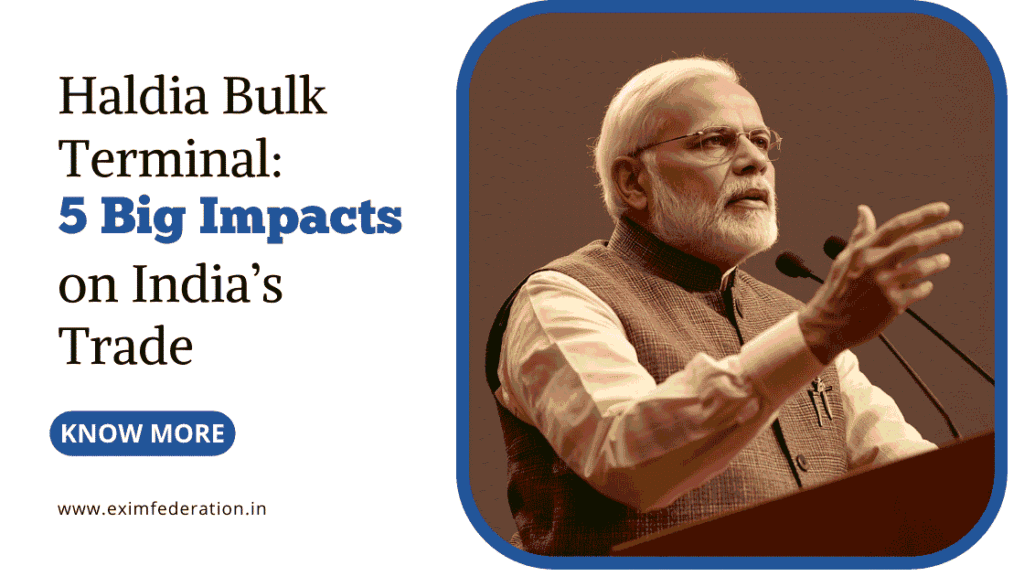
PM Modi Inaugurates APSEZ’s Haldia Bulk Terminal: India’s First Fully Automated Bulk Facility. Transform Your Business Into a Global Brand with Exim Federation Most Important – Top-5-documents-required-for-export-business-in-india Haldia Bulk Terminal: 5 Big Impacts on India’s Trade Latest updates From – Shubham D Pawar Exim Federation By Dattasa Environment Haldia Bulk Terminal 2026: Hidden Boost for Export Trade India’s maritime infrastructure is already into the new phase of world class modernization. The recent inauguration of Haldia Bulk Terminal, developed by India’s very own & prominent Adani Ports and Special Economic Zone (APSEZ), marks another & one of the most significant milestone in the country’s port development & International business in terms of Import export business and connectivity. The terminal was inaugurated by our honorable Prime Minister of India Shri. Narendra Damodardas Modi and is being recognized as India’s first & only fully automated dry bulk cargo handling facility. Located in Haldia, Eastern India’s one of the most important port zones, this project represents more than just an infrastructure expansion. It signals India’s push toward smart ports, improved logistics efficiency, connectivity and stronger export competitiveness especially for those who are far away from the sea shore. For industries that depend very heavily on bulk cargo & commodities —like steel, coal, fertilizers and cement etc—this development could reshape supply chain dynamics across eastern India. The Strategic Role of Haldia in India’s Trade , Logistics & Connectivity Network. The Haldia region has long served as a key maritime gateway for the eastern part of India. Industries across multiple states such as West Bengal, Jharkhand, Odisha and Bihar nearby region rely heavily on this port & related system for the movement of raw materials, industrial commodities and also for finished goods going to the international market for exports. Whereas, traditional bulk handling systems have often faced several operational challenges like: slower cargo unloading speeds higher manual handling costs. cargo losses during transfer. longer vessel turnaround time. Shortage & dependency of skilled labours These issues mainly create inefficiencies that can increase logistics costs for importers and exporters. The newly launched APSEZ Haldia Bulk Terminal has been designed to address these challenges through advanced automation and modern cargo handling technology. What actually Makes the Haldia Bulk Terminal Unique & one of its kind facility for the eastern region of India. The facility introduces advanced & modern systems that drastically improve the way bulk cargo is managed in Indian ports. Fully Automated Cargo Handling Unlike Traditional old school type conventional terminals, the new system uses automated conveyor based cargo movement. This reduces manual handling and most importantly minimizes material losses during cargo transfer. This Automation also ensures faster unloading of commodities like: coal limestone fertilizers minerals For industries depending on consistent & steady flow of raw material supply, this can improve operational reliability and reduce the chances of human error. Faster Vessel Turnaround Time In maritime trade, vessel waiting time directly affects logistics costs of the products. Automated bulk terminals reduce potential loading and unloading delays, allowing ships to dock and depart faster. This efficiency helps reduce demurrage charges and improves overall port productivity & efficiency. For import export, this simply means lower shipping costs and better delivery timelines. Improved Environmental Handling These modern bulk cargo facilities are also designed to reduce environmental impact. Advanced dust suppression systems and controlled cargo movement technologies help minimize energy consumption , carbon footprints, pollution and also improve safety standards within the port ecosystem. Impact on Eastern India’s Industrial Economic growth and dependency The development of the Haldia Bulk Terminal is particularly important for eastern India’s industrial growth. Several major sectors stand to benefit from this as follows: Steel Industry Steel manufacturing units rely heavily on bulk imports of raw materials like coal and iron ore. Faster cargo handling improves production continuity. Power Generation Thermal power plants often depend on imported coal shipments mainly from Australia . Improved logistics efficiency ensures uninterrupted fuel supply. Fertilizer Industry Bulk handling automation enables faster movement of raw materials used in fertilizer production, benefiting the agricultural supply chain. Mineral-Based Industries Mining and mineral processing companies can reduce logistics costs through faster cargo handling. Ultimately, improved port efficiency strengthens the industrial competitiveness of eastern India. Port Automation: The Future of Global Trade Globally, all Major ports have already embraced automation to improve efficiency and reduce operational costs. Ports worldwide like Singapore, Rotterdam and Shanghai are the best examples where they have already implemented advanced technologies that allow them to process cargo at significantly higher speeds. India’s push toward port modernization and process automation reflects an effort to stay competitive in global maritime trade. Infrastructure projects like the Haldia Bulk Terminal align with India’s broader port based development strategy, which is aiming to integrate ports with industrial corridors, logistics networks and export ecosystems. Want to start & Expand your own Import export Business? Book a free consultation Why Trade Advisory Support Still Matters While infrastructure improvements enhance logistics efficiency, navigating international trade remains complex. Businesses still need to manage several critical aspects such as: • customs procedures • port registrations & AD code linking. • export documentation • international compliance requirements. Many growing exporters rely on experienced trade consultants to navigate these processes more effectively. Organizations like Exim Federation often assist businesses in understanding export-import procedures, regulatory frameworks, and international market opportunities. With the right guidance, companies can leverage improved infrastructure while minimizing operational risks in global trade. Haldia Bulk Terminal: 5 Big Impacts on India’s Trade Iran War Impact on Indian Export Business in 2026 – Full Analysis Digital Marketing Internship in Pune | Exim Federation Real World Export Industry specific Problems From our past experience working with Indian exporters mainly on following points : Planning for sales contracts without considering the freight changes, variations & adverse conditions. Assuming logistics costs remain static. Ignoring FTA, Trade policy update & sanction updates during geopolitical escalation. Delaying Export documentation review until rejection. Lack of proper trade & marine insurance coverage to cover war risk.
Iran War Impact on Indian Export Business in 2026 – Full Analysis
how Iran Conflict Impacting on Indian Exports in 2026 | Lets understand Transform Your Business Into a Global Brand with Exim Federation Most Important – Top-5-documents-required-for-export-business-in-india USA & Israel Attack Iran — Trade Conflict Escalation Hits Import Export Business the Hardest: Compliance & Advisory for Indian Exporters Latest updates From – Shubham D Pawar Exim Federation By Dattasa Environment A Geopolitical Shock Affecting Import export Industry The recent times USA & Israel military attacks on Islamic Republic of Iran escalated Middle East tensions, triggering economic ripple effects that went far beyond geopolitics. Especially for India’s import export business point of view, the war escalation has become a live & serious operational risk impacting almost everything covering logistics, costs, compliance, banking & strategic continuity. Within a very short period of time, oil prices rose sharply, strategic & important shipping routes like the Strait of Hormuz for gulf faced threats of disruption with chances of complete closer & geopolitical risk premiums shot up across supply chain, logistics covers international freight, insurance and most important financing channels. Mainly for exporters and importers who consider risk management & planning as a later addition, this environment exposes them to avoidable financial losses, delayed shipments & compliance failures. At Exim Federation, we work with businesses to convert uncertainty into structured risk planning and execution readiness. Why This Escalation Matters the most mainly for Import Export Businesses. 1. Strategic Shipping Routes Became the Risk Centers. The Strait of Hormuz, through which a significant around 30% portion of global crude oil & LNG flows, are at the high risk of threats of disruption due to retaliation & military activity. When the strategic route impacted: Freight forwarding companies reroute ships with alternative options if any. Transit times increase. Marine insurance premiums increased drastically Logistic planners must prepare daily planner rather than quarterly. Logistics changes affect almost all trade lanes — not just Middle East trade. 2. Oil Price Volatility Translates to Cost Shock Oil prices jumped over 8–9% immediately following the attacks, reaching near multi-month highs and as per experts point of view if it extended for a longer time there are chances this could exceed $100 a barrel if disruptions continue. Why this matters for Indian exporters: Increase in production cost Diesel & petrol cost increases. Inland transport costs rise. Freight rates surge. Working capital gets squeezed automatically. This cost inflation hits every stage of an exporter’s costing sheet. 3. Shipping & Insurance Costs Surge Aggression in Middle East conflict mainly triggers: War risk surcharges by freight carriers. Marine & other trade Insurance premiums increased. Higher the risk and also freight charges. Industry reports from previous similar kinds of incidents confirms the Indian exporters are already pointing to a surge in logistics & insurance costs following the US–Israel strike on Iran. These added costs must be there in updated documents & quotations immediately & working capital plans. What problems Indian Exporters Are Facing Right Now India’s trade works in good amounts with both Iran and Israel has historically been significant — with billions in exports and imports. Beyond direct trade, India’s export ecosystem is linked indirectly via: Red Sea and Suez Canal routes for Israel particularly. Western Asian trade corridors Far-East / Europe logistics pathways via africa. Industry experts have warned that the conflict could: Drive up logistics costs Delay shipments with time. Strain payment mechanisms Impact highly on perishable goods due to time delays These are not theoretical risks — they are live disruptions exporters are experiencing today. Want to start & Expand your own Import export Business? Book a free consultation Compliance & Advisory Checklist: What Exporters Must Do Now 1. Strengthen Risk-Based Documentation Conflict increases regulatory and banking scrutiny. Export documentation vulnerable areas often include: HS code accuracy Sanction-related screening End-use and end-user declarations Mistakes here can delay customs or banking clearance — at a time when time matters most. Action Point: Audit all active export documentation and ensure sanction screening workflows are in place. 2. Review on previous Export trade Contracts & agreements Make sure your contracts & sales deed agreements mainly include: Force majeure clauses covering incase of war escalation Clear delivery timelines buffer with freight appraisal if any. Marine & other trade Insurance terms reflecting war risk coverage. Why this matters the most in such kind of scenario: Sales Contracts & deeds are majority of the times are prepared & executed in regular market conditions but maximum times it will fail under high volatility due to time & financial challenges. Now is the time to strengthen them. 3. Re Structure of Costing & duration. Do not assume stability in terms of pricing especially when it comes to international business. Businesses should consider following important points: Recalculation of product pricing Addition of freight risk & premiums Build up in fuel cost escalation clauses Without proper structural pricing changes, profit margins can erode financial condition overnight. 4. Monitor Banking & other Payment Channels During heightened war situations: Banks increase KYC and documentation with checklist Sanction-related payments are monitored. Letters of Credit (L.C.) may take longer to confirm. Action: Coordination with your bank relationship manager weekly — not quarterly. 5. Reassessment of Market Dependence Dependence on any high risk trade & War epicenter zone corridor amplifies exposure. Diversification considerations: Shift some volumes to Southeast Asia, Europe, Africa Rebalance port usage if risk persists. Alternatives for both sea & air routes. This is strategic planning — not panic reaction after the situation arises. Real World Export Industry specific Problems From our past experience working with Indian exporters mainly on following points : Planning for sales contracts without considering the freight changes, variations & adverse conditions. Assuming logistics costs remain static. Ignoring FTA, Trade policy update & sanction updates during geopolitical escalation. Delaying Export documentation review until rejection. Lack of proper trade & marine insurance coverage to cover war risk. These real mistakes cost businesses time & profits — not just Exim Documentation. About Exim Federatio Why Professional Guidance of Exim Federation & experts Matters More
Inauguration of Phase-II of PSA Mumbai at JNPT Port today by Prime Minister Shri. Narendra Modi
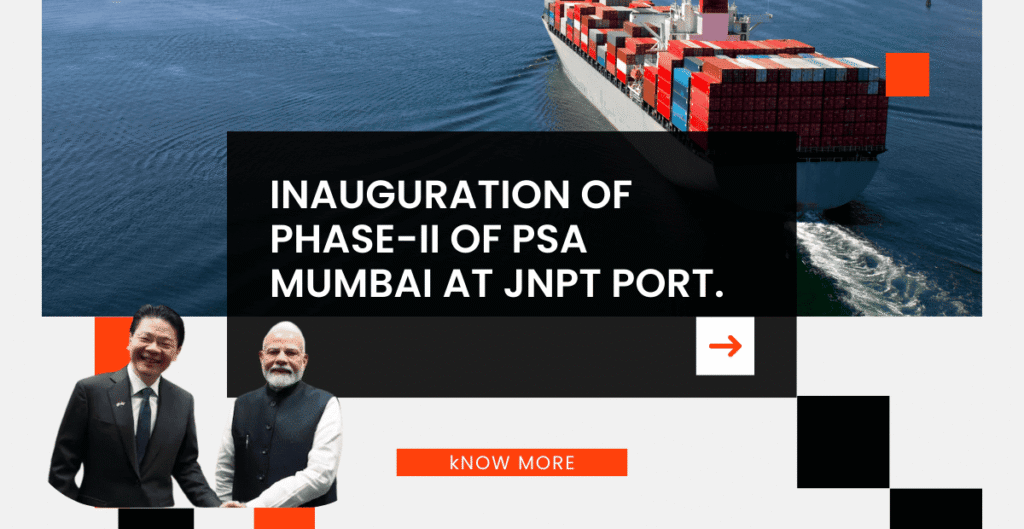
Export Import Jobs By Exim Federation Shaping Professionals for Global Markets. Pm Modi inaugurated Phase 2 of BMCT at JNPT Mumbai along with Singapore PM & officials. On the 4th and 5th September 2025, a prime minister of India Sri Narendra Damodardas Modi, along with Singapore Prime Minister Lawrence wrong, together inaugurated Bharat Mumbai container terminal Phase 2 (BMCT) at Jawaharlal Nehru port terminal i.e. JNPT port in Mumbai region Maharashtra, India. Proud moment for a people of Maharashtra and India specially those who are working in export import industry, supply chain, Logistics and custom handling along with international traits of goods as it is India’s largest container handling terminal. setting a new benchmark in the country shipping and logistics sector particularly. Why this matter the most & How it will be Game changer –JNPT port or we can say Jawaharlal Nehru Port Trust Is India’s one of the largest and busiest container handling port so it is very necessary as per future prospective and the increasing demand and the number of containers increasing day by day to establish a new face for easy handling and maintaining smooth operations of Port. With this game changing event JNPT became even more powerful and future ready. As we can see increasing numbers in terms of International Trade that is export import and government initiatives to boost manufacturing and trading of international level products. Key highlights of Phase-II:Capacity doubled – Now handle almost 4.8 million containers (TEUs) every year. Bigger quay parking – 2,000 meters of continuous berth space for large ships. Modern machines – Latest cranes and equipment for faster operations. Large yard – 200 hectares for container storage and handling. This expansion means India can handle more trade, more efficiently. Stronger Trade Connectivity – As Newly launched Phase-II is directly connected with the Dedicated Freight Corridor (DFC), this allows goods from all over the country to move faster from over 60 ICD’s i.e. inland container depots across India. Once the game changer Western DFC projects of the Government of India to boost exports of the country is fully functional, cargo movement for export as well as import from North and Central part of India will be even quicker, cutting costs, efficient and effective delivery times.This is a big step towards the government of India’s other ambitious project PM Gati Shakti mission, which focuses on faster, smarter logistics. Green and Sustainable DevelopmentThe terminal is designed with the future in mind: 1. Runs on renewable energy. 2. Plans to electrify diesel-based equipment in upcoming time. 3. Part of Green and Digital Shipping Corridors for eco-friendly and paperless trade. This makes PSA Mumbai Phase – 2, one of the cleanest and most advanced ports in India. Global Investment and Partnerships for BMCT PHASE 2Phase-II of the BMCT project was built with an investment of USD 1.3 billion (over ₹10,000 crore), making it the largest Singapore FDI in India’s port sector. It is a public-private partnership (PPP) between JNPT and PSA International.This also shows strong India-Singapore partnership in trade and infrastructure and also reflects strong trust in India’s growth. Jobs and Opportunities – The expansion has already created over 1,500 jobs for professionals. Which also includes Skilled workers, logistics professionals, and engineers are all part of the new workforce required for smooth operations.Exporters, importers, and logistics companies will also benefit as trade becomes faster, cheaper, and more reliable. Farmers and small manufacturers, too, will get better access to international markets. Maharashtra Takes the Lead again – Now With this expansion, Maharashtra’s container handling capacity has crossed 10 million TEUs, higher than Gujarat’s 8.2 million TEUs.This achievement confirms Maharashtra’s position as a maritime hub of India, with even bigger plans ahead through the upcoming Vadhavan Port which is situated near Mumbai region only as it will be one of the biggest and most important ports in the Asian region and also on a world map. Conclusion – With the inauguration of Phase-II BMCT of PSA Mumbai Terminal at JNPT is not only an infrastructure project but this is a symbol of India’s growth story. It brings together technology, sustainability, global cooperation, and economic opportunity. About Exim Federation – Starting an export business is indeed very exciting, but when it comes to selecting the right product and connecting with buyers, many businesses hit a roadblock. Exim Federation bridges this gap. Through our consultancy and detailed Product Nexus Reports, we provide clarity on product potential, target markets, and verified buyers. With this, exporters don’t waste time guessing and can step confidently into the global trade arena after getting a detailed report & market insights of selected HSN code. If you’re also facing a similar kind of problem in your exim journey, we welcome you to connect with us for a free consultation. 1. What is JNPT Port? Jawaharlal Nehru Port Trust (JNPT) is India’s largest container port, located near Mumbai. It handles a major share of India’s import and export cargo. 2. What does TEU mean? TEU stands for Twenty-foot Equivalent Unit, which is the standard measure for shipping containers. A container terminal’s capacity is usually measured in TEUs. 3. Why is PSA Mumbai’s Phase-II important? It has doubled the handling capacity to 4.8 million TEUs, making it the largest container terminal in India. This means faster trade, better connectivity, and more jobs. 4. How does this benefit exporters and importers? Exporters can ship goods faster and at lower costs. Importers will receive goods more quickly. It also reduces congestion and delays. 5. What is the Dedicated Freight Corridor (DFC)? The DFC is a special railway network built to carry cargo at high speed. PSA Mumbai’s link to the DFC allows goods to move quickly to different parts of India. 6. How does this project support sustainability? The terminal uses renewable energy and plans to electrify its machines. It also promotes paperless trade under digital shipping corridors. Exim Federation Simplifying global trade challenges. +91-7276399334 +91-9403733464 Pune, Maharashtra connect@eximfederation.in Quick Links Home About Us Services Mentor Contact