

Vrushali Nagvekar
3 months ago

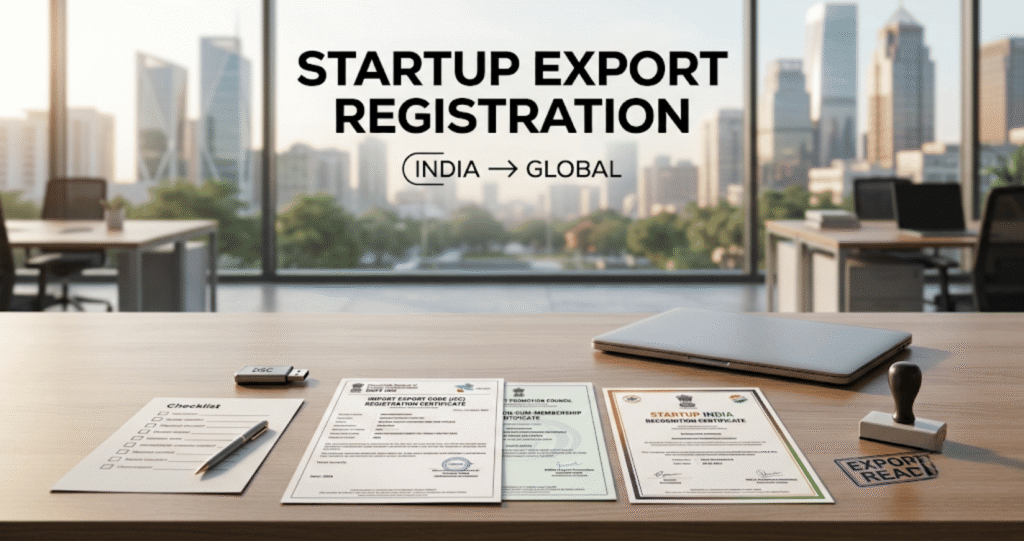
Most of the startups assume that getting an Importer Exporter Code is the only step required before sending goods for exports.
That assumption can create easily avoidable problems. An IEC is essential, but exporters may also need GST registration, LUT, RCMC, ICEGATE access, AD Code registration and product-specific approvals.
The right registration depends on your business structure, product, destination country and export model.
If you are preparing for your first international order, this export registration checklist will help you identify the main registrations and documents to arrange in India. It separates registrations that are commonly required from approvals that apply only to particular products.
The usual starting point is a legally established business, PAN, a business bank account and an IEC from the Directorate General of Foreign Trade. DGFT describes IEC as a key identification number that is mandatory for export from India, subject to applicable exceptions. DGFT IEC Profile Management
The checklist below is designed for startups and MSMEs that want to avoid last-minute documentation issues.
Before applying for export-related registrations, decide how the business will operate. A startup may export as a proprietorship, partnership firm, LLP, private limited company or another permitted structure.
Keep these basic records ready:
The name and address should remain consistent across PAN, GST, bank records, IEC and invoices. A mismatch may not always stop an application, but it can create verification questions and shipment delays.
The Importer Exporter Code is the core registration in most export transactions. The application is submitted online through the DGFT portal.
For the IEC application, DGFT guidance refers to documents such as proof of establishment, address proof and proof of the firm’s bank account. The portal also validates important firm and PAN details. DGFT IEC application guidance.
GST registration is an important part of export business registration, particularly when the business intends to claim export-related tax benefits or conduct regular commercial exports.
Exports are generally treated as zero-rated supplies under the IGST framework. A registered exporter may usually choose between:
An exporter using the LUT route must furnish the LUT before making the relevant export supplies. The GST portal provides the path Services → User Services → Furnish Letter of Undertaking (LUT). GST portal LUT guidance
A common misconception is that every exporter must pay IGST first. In practice, the suitable route depends on cash flow, eligibility, transaction structure and refund planning. Discuss the method with a qualified tax professional before issuing the first invoice.
A Registration-Cum-Membership Certificate, or RCMC, links an exporter with the relevant Export Promotion Council, commodity board or development authority.
RCMC is not automatically the same for every product. Your main product and its ITC-HS classification help determine the appropriate authority. DGFT states that RCMC is issued by authorized EPCs, commodity boards, development authorities or other competent organizations, generally for five financial years. DGFT e-RCMC service
For agricultural and processed food products covered by APEDA, exporters can apply for e-RCMC through the DGFT portal after obtaining the IEC. APEDA began issuing RCMC through the DGFT portal from 17 July 2023. APEDA RCMC procedure
RCMC may matter when you apply for certain export authorisations, incentives or council-specific services. Confirm the requirement before relying on it for a particular benefit.
IEC and GST registration do not, by themselves, complete the customs setup. Exporters should also prepare access to customs filing systems and coordinate with the authorised dealer bank.
ICEGATE is the customs electronic platform used for several customs-related services. Its guidance states that exporters can register through the portal’s registration module.
The bank-related step commonly involves AD Code registration. The AD Code identifies the authorized dealer bank branch handling foreign exchange transactions for the exporter. ICEGATE provides an advisory for registering the AD Code bank account through the exporter’s profile. ICEGATE AD Code advisory
This step deserves attention before cargo reaches the port. A bank or port mapping issue can affect the processing of export benefits and create operational delays.
There is no single registration that makes every product export-ready. The product category may trigger additional licences, certificates, testing and labelling conditions.
Examples include:
FSSAI provides a specific process for food exporters through FoSCoS, including selecting the exporter category, entering PAN/GST/CIN details where applicable, uploading documents and tracking the application. FSSAI exporter licensing procedure
Before committing to a shipment, verify:
Suppose a Pune-based startup wants to export bulk turmeric powder to the United Arab Emirates. Its basic path may include:
The exact requirements can change with the product form, buyer’s specifications and destination-country rules. A turmeric powder shipment is not assessed in exactly the same way as raw turmeric, blended spices or a retail-packed consumer product.
The most expensive registration mistake is often not a rejected application. It is shipping goods before discovering that a certificate, label or product approval was required.
Use this sequence for a cleaner setup:
3 months ago
Fantastic experience. Very impressive experience sharing by Mr Shubham. Many complicated terms made easy to understand and approachable. Thank you very much sir.

3 months ago
MSAMB तर्फे आयोजित करण्यात आलेल्या Business Consultation Session मध्ये सहभागी होण्याची संधी मिळाली. शुभम पवार सर यांनी Import-Export व्यवसायाबाबत अत्यंत सखोल, व्यावहारिक आणि सहज समजेल अशा पद्धतीने मार्गदर्शन केले. या सत्रामध्ये एक्सपोर्ट व्यवसायाची सुरुवात कशी करावी, Shop Act, Udyam Registration, कंपनीची स्थापना कशी करावी, कंपनीचे विविध प्रकार, Bill of Lading (BL) म्हणजे काय, Letter of Credit (LC) चे महत्त्व, Vessel मध्ये माल लोड करण्याची प्रक्रिया, RCMC, APEDA Registration, ICEGATE Registration, FSSAI License, Export Insurance, तसेच Export साठी आवश्यक डेटा कसा शोधावा यासह अनेक महत्त्वाच्या विषयांवर सविस्तर माहिती मिळाली. विशेष म्हणजे प्रत्येक विषय प्रत्यक्ष उदाहरणांसह समजावून सांगितल्यामुळे संपूर्ण प्रक्रिया स्पष्ट झाली आणि Export व्यवसाय सुरू करण्याचा आत्मविश्वास मिळाला. Exim Federation टीमनेही अत्यंत व्यावसायिक, संयमी आणि सहकार्याची भूमिका बजावली. सर्व प्रश्नांची समाधानकारक उत्तरे देऊन योग्य दिशा दिली. Import-Export क्षेत्रात व्यवसाय सुरू करू इच्छिणाऱ्या प्रत्येक उद्योजकाने हे मार्गदर्शन नक्की घ्यावे. मी Exim Federation आणि शुभम पवार सर यांच्या Business Consultation सेवांची मनापासून शिफारस करतो. धन्यवाद!

3 months ago
Thank you for the insightful session.

3 months ago
⭐⭐⭐⭐⭐ Excellent Import-Export session by Mr. Shubham Pawar Sir. The session was practical, easy to understand, and full of valuable insights. Thank you, Sir, for sharing your knowledge and motivating us.

3 months ago
Very well explained….

3 months ago
Sir provided very good information and also cleared any questions that I had.